
Can Women Have a Hair Transplant?
Bonita Hair Clinic Editorial Team
Dr. Natalie Loomans, Plastic Surgeon
Female Hair Loss
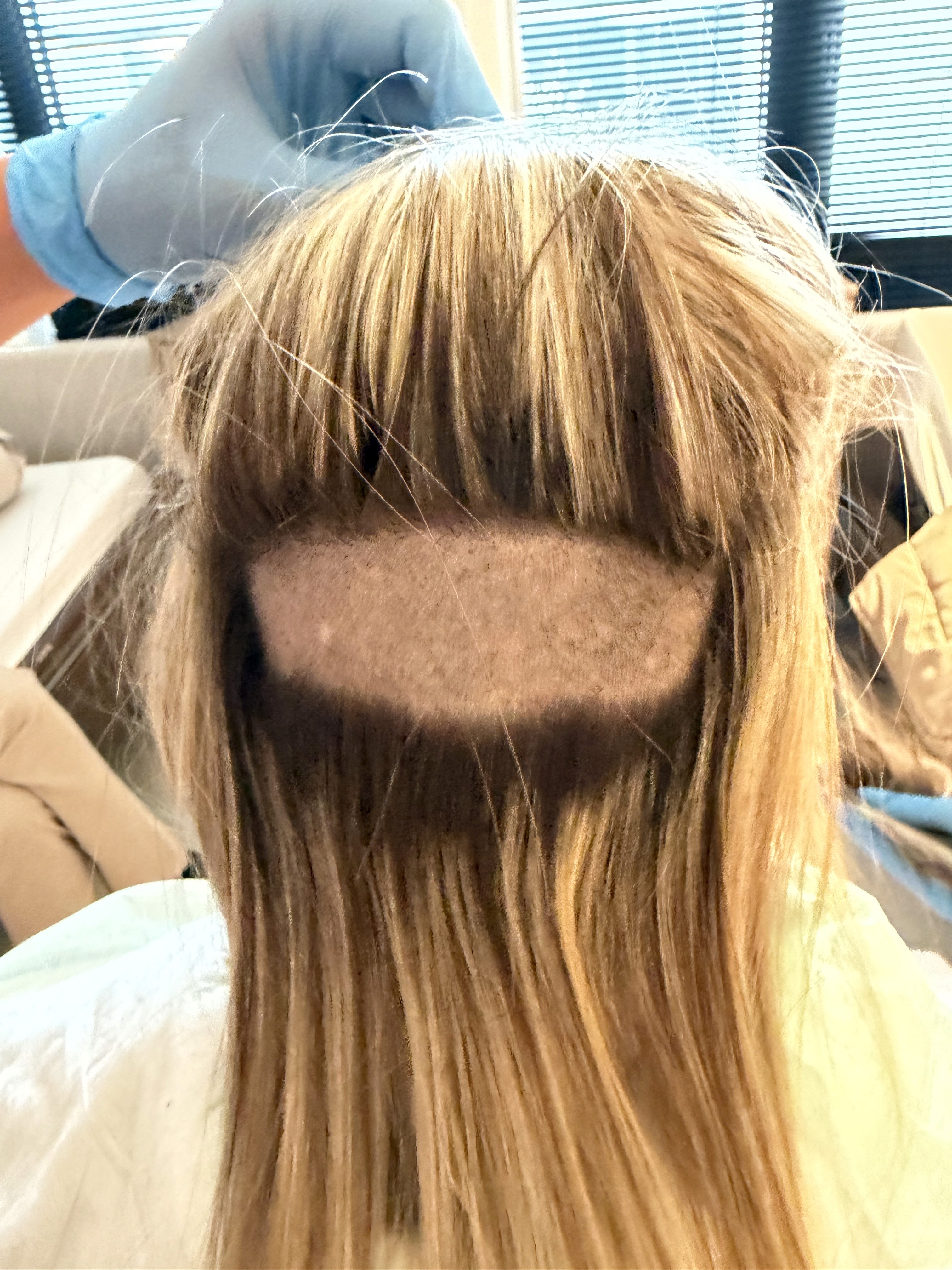
What Bonita evaluates when assessing female hair loss patterns, donor suitability, and realistic expectations.
Can Women Have a Hair Transplant?
Yes, some women can be suitable candidates for a hair transplant. However, female hair loss can have many different causes, and transplantation is not appropriate for every pattern of thinning. A careful diagnosis is therefore essential before discussing graft numbers, technique or hairline design.
Unlike some common patterns of male hair loss, thinning in women may be diffuse and may also affect the areas normally used as donor hair. The first objective of a consultation is to identify the likely cause of hair loss, assess whether it is stable and determine whether the donor area can support a safe and realistic procedure.
Diagnosis comes before surgery
Hair loss in women may be associated with female pattern hair loss, hormonal changes, nutritional deficiencies, thyroid conditions, certain medications, physical or emotional stress, traction, inflammatory scalp conditions or other medical factors.
Some causes may be temporary or may respond better to medical treatment. For this reason, surgery should not be considered until the pattern and likely cause of hair loss have been properly assessed. When appropriate, further medical evaluation or laboratory testing may be recommended before a treatment plan is made.
A hair transplant relocates existing follicles; it does not treat the underlying cause of continuing hair loss. If the condition is active or unstable, proceeding too early could result in an unbalanced appearance as the surrounding natural hair continues to thin.
Who may be suitable for a hair transplant?
A woman may be considered for transplantation when she has a clear and relatively stable area of hair loss together with a donor area that contains enough healthy, permanent follicles.
Potential candidates may include women with:
A stable pattern of thinning and a suitable donor area
A naturally high or uneven hairline they would like to improve
Localised hair loss caused by a previous procedure, injury or suitable scar
Traction-related hair loss that is no longer active
Hair loss in a defined area where the surrounding condition is stable
Suitability cannot be determined by photographs or the visible size of the thinning area alone. Hair calibre, follicular density, scalp condition, donor distribution and the risk of future progression must all be considered.
When transplantation may not be appropriate
Hair transplantation may not be the right option when thinning is widespread throughout the scalp, particularly if the donor area is also affected. Removing follicles from an unstable or weak donor zone may create additional visible thinning without providing adequate coverage in the recipient area.
Surgery may also need to be postponed or avoided when hair loss is rapidly progressing, when an inflammatory or scarring condition is active, or when the cause has not yet been identified. Temporary shedding following illness, pregnancy, hormonal change, nutritional deficiency or significant stress may require investigation and observation rather than immediate surgery.
Expectations are equally important. A transplant can redistribute available hair, but it cannot recreate the density of a naturally full head of hair. The achievable improvement depends on the patient’s existing hair characteristics and the number of follicles that can be safely harvested.
The donor area determines what is possible
The donor area is a limited resource. During assessment, the clinical team evaluates its density, coverage, hair calibre and stability. In women with diffuse thinning, this assessment is particularly important because the traditional donor region at the back and sides of the scalp may not be fully resistant to ongoing hair loss.
A responsible plan should preserve the appearance of the donor area and retain options for the future. Removing too many follicles in a single session can create visible thinning and restrict what may be possible if additional treatment is needed later.
The number of grafts should therefore be based on safe donor capacity rather than on a standard package or a desired number chosen before examination.
Hairline design requires an individual approach
Female hairlines vary considerably in shape, height, density and direction. A suitable design should complement the patient’s facial proportions, existing hair and long-term pattern of hair loss.
Creating an excessively low or dense hairline may use a large proportion of the available donor supply and could look unnatural if thinning progresses behind it. A conservative, personalised design generally provides a more sustainable and natural-looking result.
The placement angle and direction of individual grafts are also important, particularly around the hairline and temporal areas. These details must be planned according to the patient’s existing growth pattern.
What results can be expected?
Transplanted follicles normally pass through a healing and growth cycle. Some shedding of the implanted hairs can occur during the early recovery period, while new growth generally develops gradually over the following months.
The rate and quality of growth vary between patients. Final density is influenced by donor quality, hair calibre, graft survival, recipient-area size, the progression of existing hair loss and individual healing.
No ethical clinic should guarantee a specific density or outcome. The purpose of consultation is to explain what may realistically be achieved, including the limitations of the donor area and the possibility that future treatment may be needed if natural hair loss continues.
How Bonita Hair Clinic evaluates female hair loss
At Bonita Hair Clinic, the assessment begins with the patient’s medical history, the onset and progression of hair loss, previous treatments and long-term expectations. The clinical team examines the thinning pattern, scalp condition, donor density and hair characteristics before discussing whether transplantation is appropriate. Learn more about Bonita’s hair transplant planning approach.
When surgery is not currently suitable, further investigation, medical assessment or a period of observation may be recommended. When transplantation is considered appropriate, the plan is tailored to the patient’s diagnosis, donor capacity, treatment area and expected progression of hair loss.
The goal is not simply to fill a visible area. It is to create a responsible plan that protects the donor region, respects the underlying diagnosis and remains natural as the patient’s hair changes over time.
This article provides general information and does not replace an individual medical assessment. Suitability, risks and expected outcomes vary from person to person and should be discussed during consultation.